
Krishnarao Phulambrikar 'Krishnadas'
Vocal · Agra Gharana
Profile
Biography
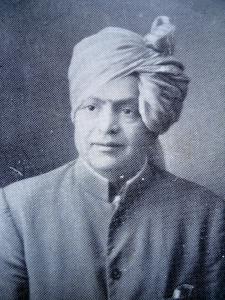
Krishnarao Phulambrikar 'Krishnadas' (born 1898) is an Hindustani classical vocalist. Known for contributions to Hindustani classical music, performance, teaching, and repertoire building.
He was also well-versed in Jod-Ragas and created many new Ragas such as Tilak Kedar (Tilak Kamod plus Kedar), Mangal Todi (Todi with both Madhyam), ShivaKalyan (Kalyan plus Shivaranjani’, DeviKalyan (Durga and Abhogi), Bilwa Bibhas (Bilawal plus Bibhas), Jaunkali (Jaunpuri & Ramkali). He composed several beautiful Bandishes, some with penname ‘Krishnadas’.
Along with Khayal, he was well-versed in Thumri-Dadra, Natyageet, Bhajan, etc. His 78 RPM record of Raga Jaunpuri was so popular, he was known as “Baje Zanan Master Krishna” in 1920’s. His Thumri was distinct from Banaras style & he carved his own style & that was known as “Khayali Thumri” or “Madhyamgram Thumri”, full with Raga-bheda & murchchanas. His Thumri’s such as Tori Binati, Dekho Mori Churiya, Shamamohan Pyare, Khelat Hai Giridhari, Ho Sham Bajaye tore gharame muraliya etc. in Bhairavi were exquisite and so, he was also called as “Bhairavi Ka Badshah” in Hyderabad state. He was the one who carved a special cast of Marathi Abhang style giving framework of Raga, which was later followed by many in Maharashtra.
He joined Bal Gandharva’s musical theatre company “Gandharva Sangeet Natak Mandali” and acted as female roles & sung in many dramas during 1915 to 1933. He also contributed in shaping Marathi NatyaSangeet in the decades of 1920’s to 1940’s with scoring music to Bal Gandharvas dramas such as Menaka, Savitri, Amrita Saidhhi, Kanhopatra, Asha Nirasha, Nand Kumar, Vidhi Likhit, etc and Jyotsna Bhole’s plays such as Kulavadhu, Ek Hota Mhatara, Kone Eke Kali, Bhagyoday.
Instrument Details
No description available.