
Dinanath Mangeshkar
Vocal · Gwalior Gharana
Profile
Biography
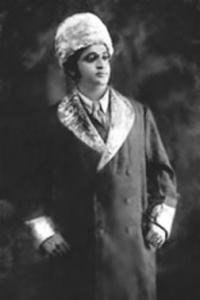
Dinanath Mangeshkar (1900–1942) is an Hindustani classical vocalist. <p><span style="font-size: small; font-family: arial, helvetica, sans-serif;">Dinanath Mangeshkar (Marathi: <span lang="mr" xml:lang="mr">दीनानाथ मंगेशकर</span>) (December 29, 1900 - April 24, 1942) was a well-known Marathi theatre actor, a renowned Natya Sangeet musician and an exceptional Hindustani classical vocalist.</span></p>.
<p><span style="font-size: small; font-family: arial, helvetica, sans-serif;">He was also popularly and reverentially addressed as <em>Master Deenanath Mangeshkar</em>. He is also the father of well-known singers Lata Mangeshkar, Asha Bhosle, and Usha Mangeshkar as well as composers Hridayanath Mangeshkar and Meena Mangeshkar.</span></p>
<p><span style="font-size: small; font-family: arial, helvetica, sans-serif;">Dinanath Mangeshkar started taking singing and music lessons from Shri Baba Mashelkar at the tender age of five. He was also to become a disciple atGwalior school. In his youth, he traveled to Bikaner and took formal training in classical music from Pt. Sukhdev Prasad, father of Pt. Mani Prasad, of theKirana Gharana. He joined the Kirloskar Sangeet Mandali and the Kirloskar Natak Mandali at the age of 11. Later, he left Kirloskar Mandali, and formed Balwant Mandali with his friends Chintamanrao Kolhatkar and Krishnarao Kolhapure. This new group had Gadkari's blessing, but shortly after the group was formed, Gadkari died in January 1919.</span></p>
<p><span style="font-size: small; font-family: arial, helvetica, sans-serif;">Dinanath's good looks and melodious voice won him popularity on the Marathi theatre. So much so that the then giant of the Marathi stage, Bal Gandharva publicly declared that he would welcome the entry of Deenanath in his organization "<em>by throwing a carpet of rupee coins under his feet</em>".</span></p>
Instrument Details
No description available.