
Rabab
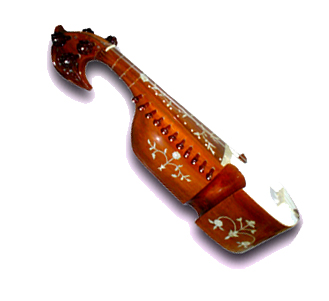
Description
Rabab refers to an old lute family found across Central and South Asia, with historical presence in North Indian and regional traditions. In Indian music, raag and taal guide melodic and rhythmic choices, and the rabab’s earthy tone suited both folk and more refined settings. It is often mentioned in the story of how certain later instruments developed, acting as a historical bridge in the evolution of North Indian lutes.
Construction varies by region, but it commonly uses a wooden body, a resonating chamber, and strings plucked with a plectrum, with some variants using a skin soundboard. Playing emphasizes clear plucked notes, drones, and ornaments depending on the tradition. It can be solo or ensemble depending on context, and what makes it unique is its deep historical footprint and rustic resonance, offering a different character from the more engineered brilliance of modern concert instruments.