
Sarangi
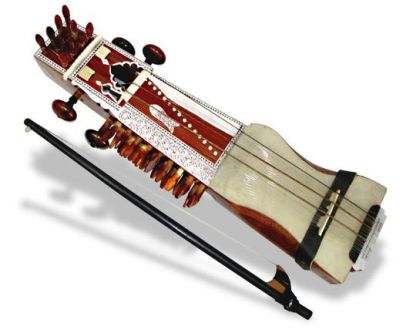
Description
The sarangi grew from North Indian folk and regional bowed instruments and later became a central partner to classical vocal music. Hindustani music revolves around raag and taal, and the sarangi’s great gift is that it can follow a singer’s microtonal movement and emotional phrasing almost as if it were another human voice. For generations it was prized as an accompanist, especially in vocal-heavy forms, and later it earned respect as a solo instrument through dedicated virtuosos.
It is usually carved from a single block of wood with a hollow body and a skin soundboard, fitted with a few main playing strings and many sympathetic strings that create a rich halo of resonance. The bow is drawn across the strings while the left hand stops them with the sides of the fingernails and cuticles, allowing extremely fine pitch nuance and continuous meend. It is both accompaniment and solo today, and what makes it unique is its unmatched ability to mirror the human voice in timbre and inflection, producing a rare, deeply emotive sound.