
Tabla
Description
The tabla is the defining percussion voice of North Indian classical music, supporting both the rhythm and the drama of performance. In Hindustani music, taal is not just a beat but a cycle with accents and structure, and tabla players bring that structure to life with theka, improvisation, and conversational exchanges with the soloist. It became widely popular because it can be delicate or thunderous, precise or playful, and it fits almost every setting from khayal to semi-classical and devotional music.
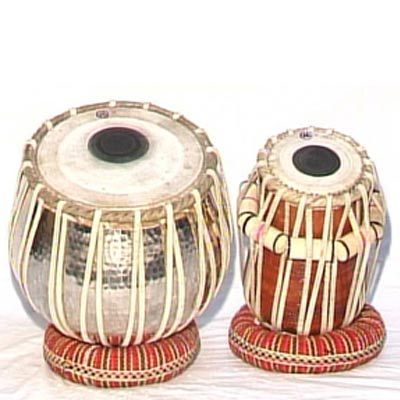
It is a pair of drums, the smaller wooden dayan and the larger bayan made from metal or clay. Each has layered skins and a central black spot (syahi) that shapes the harmonic character and gives the drums their pitched, resonant identity. It is played with fingers and palms using named strokes (bols), and the bayan can bend pitch for expressive bass movement. Tabla is both accompaniment and a major solo tradition, and what makes it unique is how musical its rhythm sounds, with pitched resonance that lets complex patterns feel melodic rather than merely percussive.